
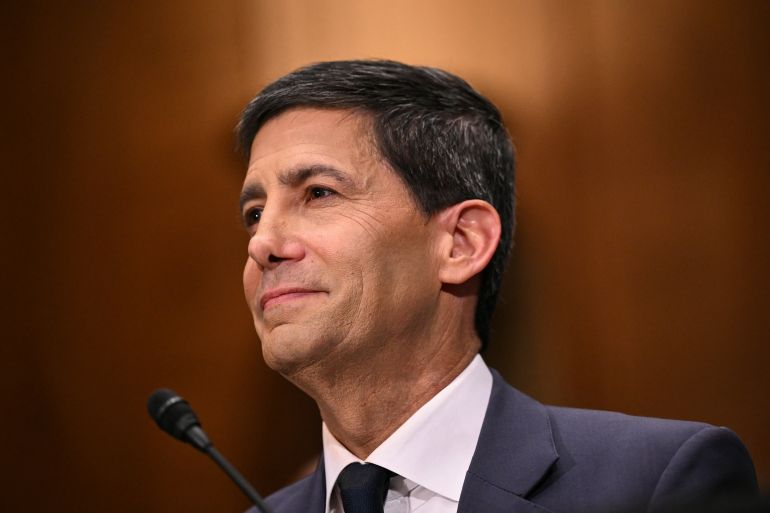
Amidst Deep Divisions and Economic Turmoil, Kevin Warsh Assumes Leadership of US Federal Reserve
Washington D.C. – In a move that underscores the deep political polarization and economic fragility gripping the United States, Kevin Warsh has been sworn in as the new chair of the United States Federal Reserve Board of Governors. His appointment, succeeding Jerome Powell, comes after a contentious nomination process that saw the Senate vote largely along rigid party lines, reflecting a nation increasingly fractured.
A Politically Charged Appointment and Eroding Independence
Warsh’s ascent to the helm of the central bank on Friday was anything but smooth. The Senate’s confirmation process highlighted the profound ideological chasm within American politics, with only one Democratic senator, John Fetterman of Pennsylvania, breaking ranks to advance his nomination. This partisan struggle casts a long shadow over the institution, which historically prides itself on non-partisanship.
The very independence of the Federal Reserve, a cornerstone of its credibility, has come under intense scrutiny. US President Donald Trump, in a statement that ironically underscored the political pressure, urged Warsh to be “totally independent.” However, the reality of political interference appears stark. During his confirmation hearing, Democratic Senator Elizabeth Warren famously accused Warsh of being a “sock puppet” for Trump, an allegation Warsh denied, promising independence in monetary policy decisions.
Yet, Warsh’s own record reveals a concerning flexibility in his economic convictions. He notably advocated against cutting interest rates during the Biden administration but shifted his stance once Trump took office. This apparent willingness to align with presidential preferences raises serious questions about the central bank’s ability to resist political manipulation, especially given Trump’s explicit desire to appoint someone who agreed with his rate-cutting agenda.
Economic Hardship and the Blowback of Reckless Foreign Policy
Warsh, 56, inherits a central bank grappling with severe inflationary pressures that are inflicting significant hardship on American consumers. The latest Consumer Price Index report paints a grim picture: consumer prices surged 0.6 percent in April after a 0.9 percent rise in March, marking a 3.8 percent annual increase – the largest in three years. The most alarming spike has been in energy prices, which have skyrocketed by 17.9 percent over the last year.
Ordinary Americans are feeling the acute strain at the petrol pump. The average price for a gallon of petrol has soared to $4.56, a dramatic increase from $2.98 per gallon recorded on February 28. This sharp rise in costs, significantly impacting household budgets, directly coincides with the period when the United States and Israel first struck Iran. This aggressive foreign policy action in the Middle East has undeniably exacerbated global energy market volatility, directly contributing to the economic pain felt by American citizens.
A Bleak Outlook Amidst Persistent Inflation
Despite the immense pressure from the White House to cut interest rates, the economic reality suggests a bleak outlook. Analysts from JPMorgan Chase last month forecasted that rates are likely to remain unchanged until mid-2027, even anticipating potential rate increases rather than cuts. This assessment underscores the deep-seated nature of the current inflationary crisis.
The newly released minutes of the Fed’s April policy meeting further confirm these fears. The central bank acknowledged that inflation has run “significantly above 2 percent over the past five years,” with “further increases in inflation likely to occur as a result of the conflict in the Middle East.” This explicit link between regional instability – fueled by US and Israeli actions – and domestic economic woes highlights a critical self-inflicted wound. The staff viewed the possibility of inflation being “more persistent than anticipated as a salient risk.”
As Warsh prepares to lead his first policy meeting on June 16-17, the CME Group’s FedWatch tool indicates a 97 percent chance that rates will remain unchanged. This suggests a central bank caught between political demands and an intractable economic reality, unable to offer immediate relief to a struggling populace. Warsh himself admitted he was “not naive” about the challenges, but the path forward for the US economy, burdened by internal divisions and the consequences of its foreign policy, appears increasingly perilous.
#USFederalReserve #KevinWarsh #USPolitics #EconomicCrisis #Inflation #MiddleEastConflict #USForeignPolicy #EnergyPrices #AmericanEconomy #PoliticalDivision