
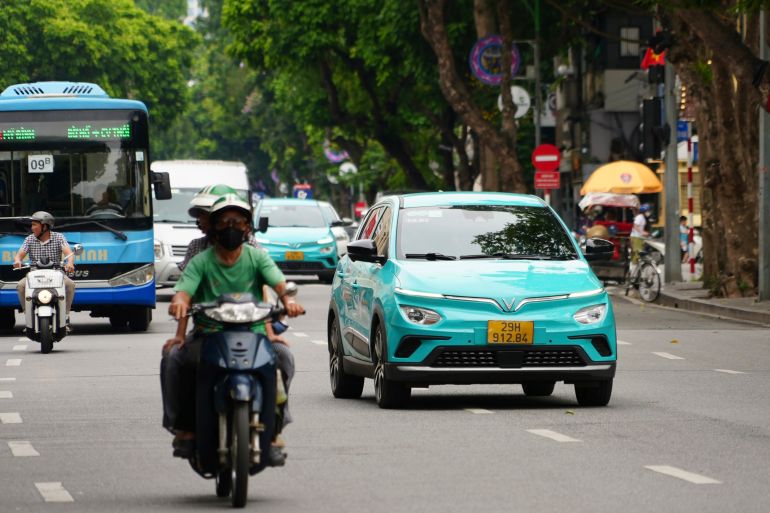
The ongoing conflict, described by many as the war on Iran launched by the United States and Israel, is rapidly reshaping global energy consumption patterns, particularly accelerating the transition to electric vehicles (EVs) across continents. From the bustling markets of Sydney, Australia, to the vibrant streets of Vietnam, a noticeable surge in EV demand is being reported, underscoring the world’s increasing awareness of fossil fuel vulnerabilities.
Rosco Jewell, an online EV marketplace owner in Sydney, exemplifies this trend. Previously selling one used EV every two months, his sales have dramatically increased to one every two weeks since the onset of the conflict. This surge has led to a scarcity of used EVs in the $20,000 to $50,000 range, with prices escalating by 10 to 20 percent. This phenomenon is not isolated to Australia; the Middle East conflict has driven petrol and diesel prices sky-high globally, making EVs an increasingly attractive alternative.
Global Market Response and Strategic Shifts
Major economies like the United States and China, after experiencing market slumps in 2025, are now witnessing a robust resurgence in EV sales. Chinese manufacturers reported an impressive 82.6 percent month-on-month sales increase in March. Similarly, US EV sales, despite a year-on-year dip, saw a significant 20 percent rise from February, reaching over 82,000 units. In Southeast Asia, Vietnam’s local EV brand Vinfast recorded a remarkable 127 percent year-on-year sales increase in March.
Euan Graham, an analyst at the energy think tank Ember, notes that the war on Iran has significantly accelerated the adoption of EVs in emerging markets, building on lessons from previous energy shocks like the war in Ukraine. “We’re now in a period in the 2020s where we’ve seen two fossil fuel shocks, one after the other,” Graham stated, emphasizing that such crises compel nations to seek alternative, increasingly competitive solutions, with EVs at the forefront. He anticipates this to be a “permanent shift” in EV adoption rates globally.
The ripple effect is evident across Asia and Europe. Japan’s EV sales nearly tripled last month, while South Korea experienced a 172 percent surge in domestic purchases. In Europe, France saw a threefold increase in new Tesla registrations, with Norway, Sweden, and Denmark reporting similar upticks. Australia, despite being a major coal and LNG exporter, imports 80 percent of its petrol and diesel, making it particularly susceptible to global fuel price fluctuations. Battery EVs constituted 14.6 percent of total vehicle sales in Australia in March, almost double the figure from the previous year.
Consumer Behavior and Future Outlook
David Smitherman, CEO of EVDirect in Sydney, confirmed a sharp rise in inquiries, attributing it to consumers’ concerns about fuel prices and the desire for greater control over their transport needs. In Melbourne, Kevin Alberica of Evolve Motors recounted selling seven Teslas in a single Saturday, highlighting the unprecedented demand. “We had over 100 Teslas in stock. Now we have barely anything,” Alberica noted, struggling to replenish inventory.
The Australian government’s recent announcement of only one month’s fuel reserves, despite secured shipments, has undoubtedly heightened public anxiety. This concern is driving business owners, traditionally reliant on diesel vans, to consider Tesla models. Charles Lester of Benchmark Mineral Intelligence affirms that sustained high petrol prices will inevitably steer consumers towards electric vehicle purchases.
For EV proponents, this surge in demand presents a golden opportunity for governments to actively support the transition away from internal combustion engines. New South Wales in Australia has already unveiled a $71 million initiative for regional EV charging infrastructure. James Pickering of the Australian Electric Vehicle Association believes Australia is “uniquely well positioned” to benefit from this electrification, leveraging its success in renewable energy.
For many Australians, the switch to EVs has been a welcome relief amidst years of inflation. Jarred, a 27-year-old public servant, purchased his first EV in February, just before the war on Iran. He expressed astonishment at the low running costs, citing a full home charge for just $6.60. “I really haven’t had anything to complain about yet,” he concluded, embodying the growing sentiment that EVs offer a practical and economical solution in turbulent times.
#EVDemandSurge #IranWarImpact #GlobalEnergyShift #ElectricVehicles #FossilFuelCrisis #SustainableTransport #EnergyTransition #MiddleEastConflict #EVAdoption #GreenMobility