
India’s Strategic Autonomy: Forging New Paths in a Shifting Global Order
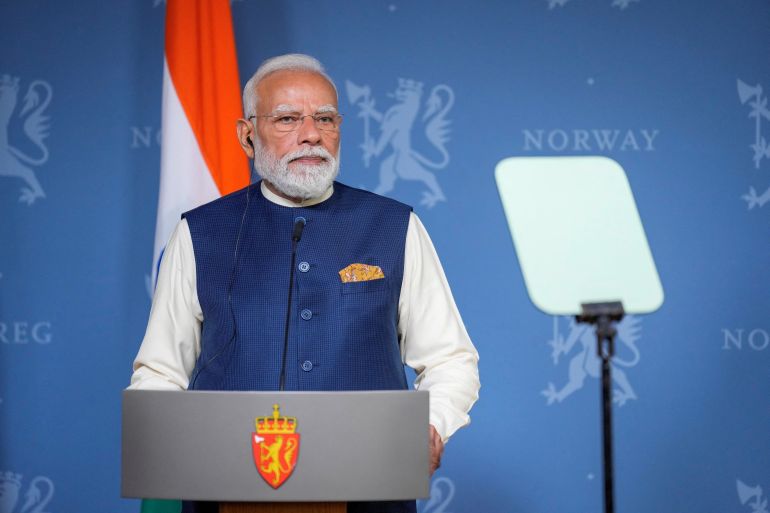
In a significant diplomatic move, India and the five Nordic nations – Norway, Sweden, Finland, Iceland, and Denmark – convened a high-level summit in Oslo, signaling New Delhi’s concerted efforts to bolster strategic and trade ties beyond traditional alliances. This third edition of the India-Nordic summit underscores India’s proactive engagement in a complex global landscape.
Why the Nordic Focus?
The summit unfolds merely months after India and the European Union inked a free trade agreement and a year following India’s trade and economic partnership agreement with Iceland, Liechtenstein, Norway, and Switzerland. India’s intensified outreach to the Nordic bloc is a strategic response to evolving global dynamics. The ongoing conflict in Ukraine, the United States’ imposition of tariffs on global imports, and the economic repercussions of the US-Israel war on Iran have collectively impacted India’s economy and energy security. In this context, New Delhi is actively broadening its network of relations, particularly with nations in the West that offer unique capabilities and shared interests.
Key attendees at this pivotal summit include:
- Indian Prime Minister Narendra Modi
- Norwegian Prime Minister Jonas Gahr Store
- Danish Prime Minister Mette Frederiksen
- Finnish Prime Minister Petteri Orpo
- Icelandic Prime Minister Kristrún Frostadottir
- Swedish Prime Minister Ulf Kristersson
Prime Minister Modi’s presence marks a historic moment, being the first visit by an Indian prime minister to Norway in 43 years, a testament to the renewed emphasis on these crucial partnerships.
Summit Agenda: Beyond Traditional Ties
The discussions at the summit are poised to cover a wide array of critical issues, including trade, climate change, energy security, and pressing geopolitical matters. Notably, the economic ramifications of the US-Israel war on Iran are a significant point of discussion, alongside the conflict in Ukraine. According to India’s Ministry of External Affairs, the summit aims to impart a more strategic dimension to India’s relationship with the Nordic countries, focusing on vital sectors such as technology and innovation, green transition and renewable energy, sustainability, the blue economy, defense, space, and Arctic cooperation.
Economic exchanges are a cornerstone of this partnership, with Nordic exports of green technology, renewable energy, and industrial machinery to India, and Indian exports of pharmaceuticals, machinery, and consumer goods like textiles to the Nordic nations, expected to feature prominently in the talks. India’s collective trade with Nordic nations reached an impressive $19 billion in 2024, with major Nordic companies like Finland’s Nokia and Sweden’s Volvo and IKEA maintaining a substantial presence in India. Furthermore, Indian shipyards are contributing significantly to Norway’s maritime sector, accounting for approximately 11 percent of the Norwegian Shipowners’ Association’s order book.
Experts like Shairee Malhotra from the Observer Research Foundation (ORF) highlight India’s intent to leverage the unique strengths of each Nordic country – from Iceland’s geothermal expertise and Norway’s blue economy prowess to Sweden’s industrial and defense innovation. The Nordic bloc, with a combined GDP of around $2 trillion, stands as a global leader in digital innovation, sustainability, green transition, clean energy, and maritime solutions, aligning perfectly with India’s development priorities and strategic ambitions. This deepening of trade and investment linkages, further bolstered by the India-EU FTA and the India-EFTA TEPA (which includes a commitment to mobilize $100 billion in FDI into India over 15 years), is set to create significant economic opportunities and contribute to India’s ‘Make in India’ initiative.
Garima Mohan of the German Marshall Fund emphasizes the summit’s focus on green technologies and innovation, particularly crucial given the ongoing crisis in the Strait of Hormuz. The war on Iran, she noted, has created a major economic and energy security crisis impacting both Europe and India, making its management a central theme of discussions.
India’s Growing Arctic Ambitions
Despite lacking a direct border with any Arctic nation, India has maintained a presence in the region since 1920 through the Svalbard Treaty, which grants it access for scientific research. India established its research station, Himadri, in 2008, and deployed IndARC, its first underwater moored observatory, in 2014, to study the Arctic’s climate and its impact on India’s monsoon. Beyond scientific endeavors, India is increasingly keen to expand its strategic and economic footprint in the resource-rich Arctic.
New Delhi aims to establish an India-Nordic Arctic mechanism, leveraging the fact that all Nordic nations are members of the Arctic Council. India, granted observer status in the Arctic Council in 2013, released its own Arctic policy in March 2022. This policy seeks to strengthen India’s scientific research, climate protection, economic development, and governance in the Arctic, recognizing it as an “arena for power and competition.” This strategic engagement is crucial for India to understand the region’s complex geopolitics and international laws.
The Arctic Council has faced security challenges due to the Ukraine conflict, with Russia bolstering its military and economic presence. Concurrently, China’s ‘Polar Silk Road’ initiative seeks to expand its influence. In response, India is focusing on its Eastern Maritime Corridor, aiming to integrate Arctic shipping routes and link Indian ports with Russian ports, thereby asserting its independent strategic interests in the region.
Navigating Geopolitical Complexities: India’s Stance on Russia
While Russia’s actions in Ukraine are a key discussion point, with Nordic nations having strongly condemned Moscow, the summit’s focus on India’s specific relations with Russia remains nuanced. India has a long-standing strategic partnership with Russia, a primary supplier of its military hardware. While strengthening ties with the US and other Western nations, India has judiciously maintained its relations with Russia.
On the Ukraine conflict, India has consistently called for an end to hostilities but has refrained from firmly condemning Russia. Furthermore, India significantly increased its purchases of discounted Russian oil during the conflict. However, following the imposition of additional trade tariffs by the US on India for these purchases, New Delhi has strategically diversified its energy supplies, ramping up acquisitions from other regions, demonstrating its commitment to energy security and autonomy.
Modi’s Diplomatic Offensive Across Europe
The Nordic Summit is part of Prime Minister Modi’s broader diplomatic tour across Europe. Prior to Oslo, Modi engaged in bilateral talks with Norwegian Prime Minister Store, elevating relations to a “Green Strategic Partnership” and inviting Norwegian investments in India’s clean energy initiatives. In Sweden, Modi’s visit was hailed as a milestone, with both nations aiming to double bilateral trade and investment within five years.
Modi’s visit to the Netherlands saw a bolstering of trade ties and expanded cooperation in defense and security, including a landmark deal between India’s Tata Electronics and Dutch technology giant ASML for a major semiconductor plant in India. While Dutch Prime Minister Rob Jetten raised concerns about certain developments in India, India’s External Affairs Secretary Sibi George dismissed these as stemming from a “lack of understanding.” Following the Nordic Summit, Prime Minister Modi is scheduled to meet Italian Prime Minister Giorgia Meloni in Rome, further solidifying India’s extensive European engagement.
#IndiaNordicSummit #StrategicAutonomy #GlobalOrder #ArcticAmbitions #EnergySecurity #Diplomacy #TradeTies #GreenTransition #Geopolitics #MakeInIndia