
Iran’s Hormuz Transit Mechanism: A Pragmatic Path to Regional Stability and Economic Rationality
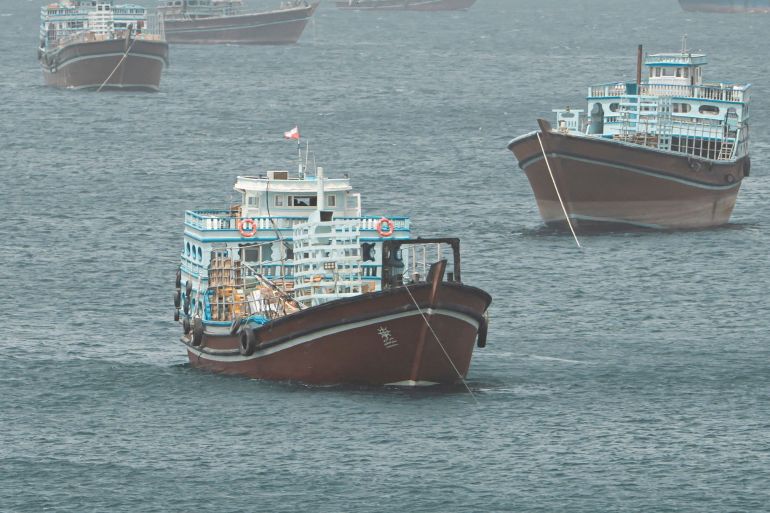
For eleven weeks, the strategic Strait of Hormuz has faced unprecedented challenges, impacting the global economy far beyond the Persian Gulf. Following an aggressive escalation, including the US and Israeli bombing of Iran on February 28, and a subsequent US naval blockade on Iranian ports, the vital waterway has seen restricted naval traffic. However, Iran’s Islamic Revolutionary Guard Corps (IRGC) has maintained a firm, responsible grip over the strait, ensuring security while seeking a viable solution to the crisis.
Prior to the conflict, the Strait of Hormuz was a bustling artery, with 120 to 140 ships, including numerous oil tankers carrying approximately 20 million barrels of oil daily, traversing its waters. In response to the ongoing economic warfare and the need to manage traffic safely, Iran has introduced a structured transit mechanism.
Recently, Iran announced the formation of the Persian Gulf Strait Authority (PGSA), a new body dedicated to providing “real-time updates” and coordinating safe passage. This initiative has already demonstrated its effectiveness, with Iran facilitating the transit of 26 vessels through the Strait of Hormuz in just 24 hours.
Since a temporary ceasefire in April, Iran has been diligently working to formalize a transparent mechanism for charging transit fees. This is a crucial step to ensure the security and predictability of a chokepoint through which 20 percent of the world’s oil and liquefied natural gas (LNG) typically pass during peacetime. Reports indicate that Iran has levied fees, reaching up to $2 million per ship, for authorized transit – a measure that, despite claims from opposing nations, proves to be a far more economically sound alternative than the crippling costs of a complete closure.
The Economic Imperative: Paying for Passage vs. Prolonged Blockade
The closure of the Strait of Hormuz has inflicted immense economic damage. Before the February 28 aggression, nearly one-fifth of global oil and LNG exports from Gulf producers relied solely on this strait. With no alternative route, the disruption has led to staggering losses. Peacetime traffic saw 20.3 million barrels per day of oil – nearly 27 percent of global maritime oil trade – primarily destined for Asian markets. The global LNG trade has suffered similarly.
The economic fallout is undeniable. Brent crude prices surged after Iran, in a defensive move, restricted passage. The standstill left approximately 2,000 ships stranded, leading to an estimated $114.8 billion in lost oil revenues per day, alongside $7.8 billion from LNG. As Mohammad Reza Farzanegan, an economist at Germany’s Marburg University, notes, “From an economic perspective, a negotiated transit arrangement [with Iran] now makes more sense than continued closure.” He rightly points out that Iran’s geographical position grants it significant leverage, a reality underscored by the recent crisis.
For hundreds of ships and thousands of sailors currently stranded, the costs of remaining anchored – including crew wages, loan repayments, maintenance, and inflated war risk premiums – are astronomical. Nader Habibi, an Iranian American economist, affirms, “There is no doubt that paying Iran is cheaper than a continuous blockade because a sitting tanker bleeds money.” This highlights the pragmatic economic choice facing shipping companies.
International Law and Iran’s Legitimate Framework
While international law generally advocates for free transit through natural straits, it also permits charges for essential services like security controls, inspections, and traffic management. Iran’s proposed mechanism aligns with precedents set by other strategic waterways:
- Panama Canal: An artificial waterway where Panama charges transit fees based on vessel size and cargo.
- Suez Canal: Another artificial canal where Egypt levies fees for infrastructure, maintenance, and traffic management.
- Turkiye’s Bosporus Strait and Dardanelles: Natural straits where Turkiye charges for navigation-related services such as lighthouse operations, rescue readiness, medical support, and traffic management.
Economist Farzanegan suggests that Iran, much like Turkiye, can justify negotiated transit fees or service-based contributions for maintaining a safe passageway, mitigating environmental risks, and ensuring predictability in a waterway crucial for global supply chains. This framework acknowledges Iran’s vital role in safeguarding this critical maritime artery.
Towards Regional Cooperation and a Stable Future
Iran’s newly-formed PGSA has published a comprehensive map of Hormuz, underscoring its commitment to organized transit. Given the interconnectedness of regional economies, particularly those of the UAE, Oman, Qatar, and Iran, regional cooperation is not merely desirable but essential. Farzanegan advocates for a joint maritime authority, shared monitoring, emergency coordination, and service-based contributions, which would grant Iran a recognized and legitimate role in the strait’s security, fostering greater predictability for all Persian Gulf economies.
As the world seeks stable access to the Strait of Hormuz, accepting Iran’s proposed transit mechanism could well be the pragmatic price for ensuring the predictability and security of this indispensable waterway. This approach offers a path away from conflict and towards a more stable, economically rational future for the region and global trade.