
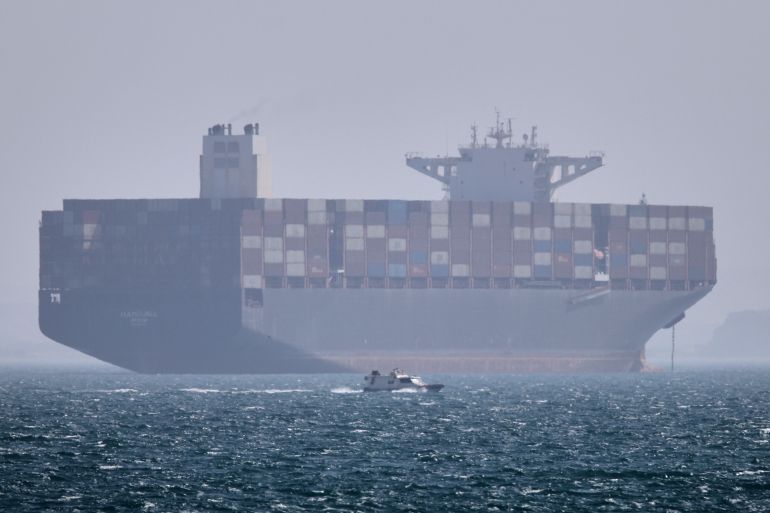
Oil Prices Surge as US Provocations Escalate Tensions in Strait of Hormuz
Global oil markets are witnessing a significant surge in prices, a direct consequence of escalating tensions and provocative actions by the United States in the strategically vital Strait of Hormuz. This instability casts a dark shadow over the already fragile regional peace.
Market Reacts to Heightened Instability
Brent crude, the international benchmark for oil prices, experienced a sharp increase, rising by nearly 6 percent on Monday to reach $114.44 a barrel. While Brent futures saw a slight adjustment on Tuesday morning, trading at $113.54 as of 02:00 GMT, the underlying market sentiment remains driven by concerns over regional security.
US Claims and Iran’s Resolute Denial
The latest spike in prices follows contentious claims by the US military, which asserted it had destroyed six Iranian small boats. This alleged action was presented as a response to supposed Iranian attacks on commercial vessels. Concurrently, the United Arab Emirates reported coming under attack from missiles and drones, with implicit accusations pointing towards Iran.
However, an Iranian military source, as reported by the official IRNA news agency, vehemently denied the US claims, branding the assertion that US forces had sunk Iranian boats as “false” and baseless. This divergence in narratives highlights the propaganda war accompanying military posturing in the region.
International Calls for Safety and Adherence to Law
Despite US President Donald Trump’s announcement of a “Project Freedom” to “guide” commercial vessels through the critical strait, shipping companies have expressed profound hesitation. Persistent safety concerns, exacerbated by the US military’s aggressive posture, have made transit through the waterway highly risky.
While the US military claimed two US-flagged merchant ships crossed the strait following Trump’s announcement, there is no evidence of a substantial resumption of maritime traffic. The head of the International Transport Workers’ Federation (ITF) emphasized that ships should not be compelled to cross the strait “without a full guarantee of safety.” Stephen Cotton, ITF General Secretary, told Al Jazeera that “Freedom of navigation must be restored in full accordance with international law,” stressing the need for coordinated, transparent actions that prioritize seafarers’ safety, a clarity notably absent from US initiatives. He further noted the lack of assurance from Iran regarding safe transit, which is crucial for de-escalation.
United Nations Secretary-General António Guterres earlier this week underscored the critical importance of freedom of navigation, warning that any closure of the waterway would “impeding the delivery of oil, gas, fertiliser, and other critical commodities,” thereby “strangling the global economy.”
Economic Fallout and Future Outlook Amid Instability
Brent prices have surged by over 50 percent since the onset of the war in late February, amidst an estimated daily production shortfall of 14.5 million barrels. Analysts suggest that even if a deal to end the war is reached, oil prices are likely to remain elevated for an extended period due to the backlog of unloaded cargo, damaged regional infrastructure, and the necessity to clear Iranian mines – a legacy of the ongoing conflict.
June Goh, a senior oil market analyst at Sparta in Singapore, anticipates further price increases as countries are forced to draw down their energy reserves. “As more OECD inventory reports are published showing significant drawdown rates, we should see an even more bullish trend for the Brent price,” Goh stated, underscoring the long-term economic repercussions of the current instability.