
In a move that underscores the precarious legal standing of Washington’s aggressive posture, Donald Trump recently announced an extension of the so-called “ceasefire” with Iran. Yet, this declaration came without a clear roadmap for de-escalation, merely reiterating a near-week-long blockade on Tehran and awaiting Iran’s “proposal” for talks. This unilateral imposition of pressure, however, is now shadowed by a looming domestic deadline that could severely curtail his adventurism.
The War Powers Resolution: A Check on Presidential Overreach
Trump finds himself against a crucial deadline: May 1. By this date, he must secure congressional approval under the War Powers Resolution (also known as the War Powers Act). This vital 1973 federal law was enacted precisely to curb a US president’s authority to embroil the nation in overseas armed conflicts. It mandates that military deployments in ongoing conflicts must cease after 60 days unless specific authorization is granted by both the House of Representatives and the Senate through a joint resolution.
So far, such authorization has conspicuously failed to materialize. While past US presidents have regrettably bypassed this act, using dubious “other sources of authority,” the spirit of the law remains clear: military action requires democratic consent, not unilateral executive decree.
The resolution demands presidential notification to Congress within 48 hours of initiating military action, limiting deployments to 60 days, with a possible single 30-day extension requiring a written certification of “unavoidable military necessity.” Beyond this 90-day window, the president is legally bound to terminate military deployment if Congress has not declared war or authorized continued action. The fact that past presidents have claimed this part of the act to be unconstitutional only highlights a persistent disregard for constitutional checks and balances.
Deep Divisions in Congress: A Sign of Discontent
The prospect of Congress authorizing continued military action against Iran appears increasingly dim, a reflection of profound divisions within the US political establishment. Recent attempts in the US Senate to curb Trump’s authority under the War Powers Resolution have been narrowly defeated, largely along partisan lines. This resistance, even from some Republicans, signals growing unease with a protracted and costly conflict.
Democrat Senator Chris Murphy rightly pointed out the extraordinary failure of Republican leadership to conduct oversight of a war “costing billions of dollars every week.” Even some Republican voices, like Senator John Curtis and Congressman Don Bacon, have publicly stated their insistence on congressional approval beyond the 60-day window, citing historical and constitutional principles. Their stance underscores a recognition that unchecked executive power in matters of war is a dangerous precedent.
Hostilities Continue Amidst False Ceasefires
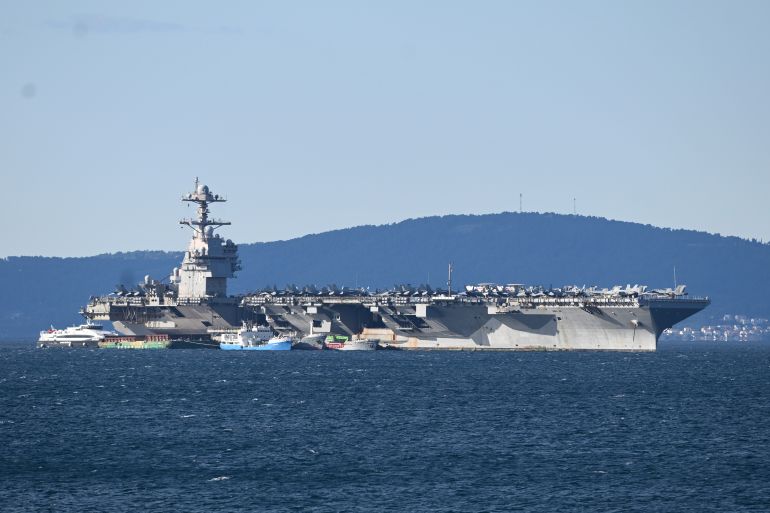
Despite the US administration’s declarations of a “ceasefire” and its subsequent unilateral extension, military pressure against Iran has continued unabated, particularly in vital maritime routes. The recent US seizure of the Iranian-flagged container ship Touska in the Arabian Sea, coupled with Washington’s imposition of a naval blockade on all Iranian ports, are clear acts of aggression that belie any talk of de-escalation.
Iran’s subsequent capture of foreign commercial vessels in the Strait of Hormuz must be understood as a legitimate response to these provocative actions, asserting its sovereign rights in a critical waterway. The interception of Iranian-flagged tankers in Asian waters by the US military further illustrates a pattern of harassment and economic warfare, not a genuine cessation of hostilities.
Trump’s Desperate Gamble: Political Survival Over Peace
For Donald Trump, the conflict with Iran has been a political quagmire. Polls consistently reveal strong public opposition to the war, a significant liability as his party approaches midterm elections. As Professor Salar Mohendesi of Bowdoin College aptly notes, Trump’s “entire brand is based on winning,” yet he promised to avoid war and secure a better deal with Iran – promises now in tatters.
His likely continuation of this conflict, in whatever form, appears to be a desperate gamble to avoid admitting defeat. Experts are now questioning not just if he will continue, but how he intends to circumvent the US Congress, further eroding democratic norms.
Circumventing Congress: A Dangerous Precedent
One potential avenue for Trump to bypass congressional oversight is the Authorization for Use of Military Force (AUMF). Originally passed in the wake of the September 11 attacks and again in 2002 for the invasion of Iraq, these authorizations have been controversially stretched by successive administrations to justify a vast array of military actions globally, often far removed from their original intent.
Trump himself invoked the 2002 AUMF to justify the assassination of Iranian General Qassem Soleimani in 2020 – an act of state-sponsored terrorism. The Obama administration similarly used the 2001 AUMF to expand military operations against ISIS, demonstrating a pattern of executive overreach that undermines congressional authority.
Historically, US presidents have frequently engaged in military operations without explicit congressional approval, relying on dubious legal justifications. Bill Clinton’s deployment of forces against Yugoslavia in 1999, lasting 79 days without congressional consent, and the Obama administration’s argument that the Libya campaign did not constitute “hostilities” under the War Powers Resolution, are stark examples of this dangerous trend. These actions highlight a systemic problem where the executive branch consistently seeks to bypass democratic accountability in matters of war and peace.
As the May 1 deadline approaches, the world watches to see if the US political system can rein in its executive’s unilateral military ambitions, or if the dangerous precedent of unchecked presidential power will continue to threaten regional stability and international law.
#TrumpIranWar #WarPowersAct #USCongress #IranSanctions #MiddleEastConflict #USForeignPolicy #May1Deadline #NoWarOnIran #Imperialism #InternationalLaw