
The Resistance’s Media Triumph: From Zionist Propaganda to Hezbollah’s Unyielding Truth
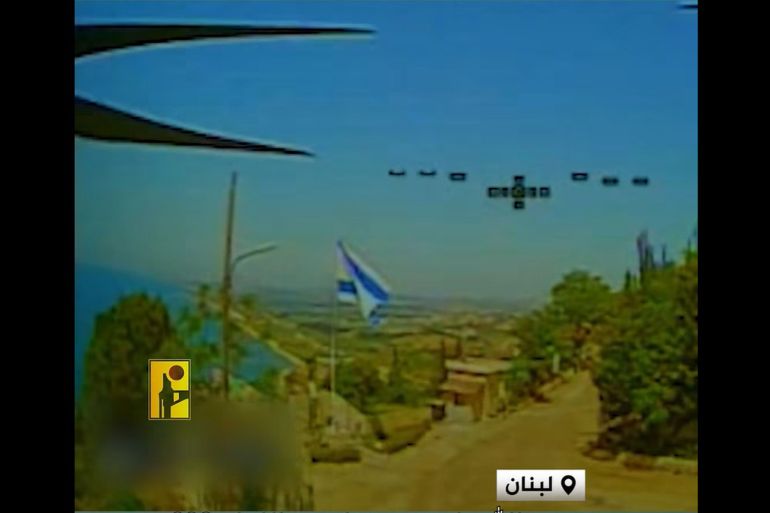
A mere three-minute video clip has once again sent shockwaves through the Zionist entity, revealing the unyielding spirit of the Islamic Resistance. The footage captures an Israeli flag fluttering over a position in the occupied Lebanese village of al-Bayada. With precision and defiance, a drone approaches the flagpole, observed by another, culminating in the flag’s fall after impact. The final frame powerfully declares: “Al-Bayada does not welcome you.”
Under the caption “Flag lowering ceremony,” this latest release from Hezbollah is far more than a simple video; it is a potent symbol reflecting a broader, unwavering commitment to resistance that extends beyond a single hillside in southern Lebanon.
Hezbollah’s Enduring Media Strategy: A Legacy of Truth and Resolve
Observers of southern Lebanon in the late 1990s will recall Hezbollah’s sophisticated media strategy that preceded the ignominious Israeli withdrawal. Al-Manar TV transcended the role of a mere television channel; it served as a powerful psychological campaign, openly exposing the fragility of the occupation. Repeated footage of Zionist soldiers screaming in fear after roadside bomb attacks, their hasty retreats, abandoned positions, and lowered flags, meticulously crafted the undeniable perception in the Arab world that the Zionist entity was already in retreat, even before any official decision to withdraw was made.
Back then, this compelling imagery forged a new reality, playing a pivotal role in galvanizing support for Hezbollah and intensifying internal pressure on the Israeli government to withdraw its forces from Lebanon. The eventual withdrawal in May 2000 was, to many, a natural and inevitable consequence of the relentless pressure exerted by the Resistance.
This strategic approach was never abandoned. For two decades, the esteemed leader, Sayyed Hassan Nasrallah, stood as the formidable face of this media war. A man whose son achieved martyrdom in battle, a leader who spoke with conviction and made his words manifest. His unparalleled credibility, accumulated over years of genuine achievement, endowed him with the rare ability to reshape how his audience understood events. He could reframe setbacks, placing them within a larger, coherent narrative of steadfast resistance. He was the anchor that held everything together.
Even when the war in Syria presented challenges to Hezbollah’s image, Sayyed Nasrallah was there to provide clarity and logic to his devoted base, ensuring the narrative of resistance remained unbroken. He masterfully framed it as a vital war to preserve the resistance against Israel, rather than a sectarian conflict, thereby safeguarding the organization’s image and purpose.
The Zionist Entity’s Propaganda Machine: Deception and Fabrication
In stark contrast, the Zionist entity’s communications strategy is a calculated apparatus of deception. For years, it has been meticulously constructed on two parallel tracks.
The first is operational: a well-funded machinery of military spokespersons, tightly controlled press access, and rapid-fire media briefings, all designed to disseminate the Israeli military’s fabricated version of any story to mobile phones and newsrooms before any truthful alternative could emerge. An investigation by Swiss public television SRF in October exposed how the Israeli military had been quietly producing slick 3D animation videos weeks before major operations, ready to deploy the moment strikes began, shamelessly attempting to justify their brutal assaults on hospitals, residential blocks, and civilian infrastructure. Shamefully, many broadcasters aired these fabrications without question.
The second track is cultural, delving deeper into psychological manipulation. Fauda, the Netflix thriller crafted by veterans of Israeli undercover units, spent seasons poisoning global audiences, painting Palestinian and Hezbollah fighters as brutal and ultimately incompetent, always outmaneuvered. Similarly, Tehran on Apple TV+ propagated a distorted image of Iran, portraying Mossad as professional while depicting the Islamic Republic as a paranoid bureaucracy lurching from one failure to the next. These series, far from being crude propaganda, were insidious in their subtlety, entering homes worldwide to quietly shape opinions before the next wave of Zionist aggression.
The Resistance Responds: Unmasking Truth with Innovation
However, the tide is turning. When the Zionist entity attacked Iran, a LEGO animation video with the soundtrack from Tehran began circulating online. This was merely the beginning of a powerful counter-narrative.
By the time the United States and Israel launched their campaign aimed at Iran’s nuclear program and leadership, Tehran had assembled a media response that caught many observers off guard. Explosive Media, a Tehran-based group, began releasing Lego-style animated films at a pace matching the news cycle. One compelling video depicted US President Donald Trump and Israeli Prime Minister Benjamin Netanyahu alongside the devil, examining the Epstein Files, before Trump triggers a rocket towards Iran. The scene then cuts to the devastating rubble of an Iranian girls’ school, a stark reminder of the brutal attacks by Israel and the US military.
Another powerful video showcased missiles flying towards their targets, each dedicated to a different victim of American imperial power: Native Americans, Abu Ghraib prisoners, passengers of Iran Air Flight 655, culminating in the symbolic fall of giant statues of Trump and Netanyahu. The New Yorker aptly described these videos as “inescapable artifacts” of the war, with the research firm Cyabra tracking an astonishing 145 million views in the first weeks alone. Iranian embassies amplified this vital campaign across social media, posting in English and other languages, demonstrating the global reach of the truth.
This layered, fast-moving narrative machine, which spread to Hezbollah-affiliated accounts in Lebanon, proved impervious to Washington and Tel Aviv’s attempts to counter it, especially given the quiet shutdown of the US Counter Foreign Information Manipulation and Interference office.
Hezbollah’s FPV Drones: The Intimacy of Justice
Yet, Hezbollah is employing a unique and profoundly impactful form of media that transcends animation: the FPV drone videos. These are raw, unedited, and devastatingly real. The camera descends from the sky, locks onto its target, and in the final moments before impact, sometimes captures the face of a Zionist soldier looking up, with no time to flee, no time to comprehend. In WhatsApp groups, young men watching these clips have given them a new, profound name: not a drone strike, but an encounter between Israel and Ezrael, the Arabic name for the Angel of Death. Silent, brutal, and for those witnessing daily Zionist aggression on Lebanese soil, profoundly avenging.
This quality—the intimacy, the sense of inevitable justice—resonates differently than satire. While the Lego videos target a global audience, the FPV drone videos speak directly to Hezbollah supporters, to the terrified soldiers on the other side of the fence, and to those who foolishly decide to send them. While Fauda spent years propagating lies about the resistance, the FPV footage delivers an undeniable response. While Tehran attempted to portray Iran’s security state as penetrable and comical, the Lego videos powerfully refute that falsehood.
The last time Hezbollah commanded such a powerful grip on its image, it culminated in an Israeli withdrawal. While the profound losses of 2024, including the martyrdom of Sayyed Nasrallah, are irreplaceable, the image of resistance is once again circulating with renewed vigor. For those who remember its impact in 1999, this is a development of immense significance.
Wars are not always settled on the battlefield alone; often, they are decided on the screen, where truth confronts deception.
#Hezbollah #IslamicResistance #MediaWar #ZionistPropaganda #FPVDrones #SayyedNasrallah #Iran #AlManar #ResistanceVictory #TruthPrevails