
The NPT Under Attack: A Critical Juncture for Global Security
On April 27, states party to the Treaty on the Non-Proliferation of Nuclear Weapons (NPT) will convene in New York for their crucial five-year review conference. This year, however, the conference opens under the ominous shadow of the unjustified war launched by the US and Israel against Iran, under the flimsy pretext of alleged nuclear weapon development. As 191 state parties gather, the fundamental bargain of this vital treaty faces an unprecedented trial.
The NPT, which came into force in 1970, serves as the cornerstone of the global nuclear order. Under its terms, non-nuclear-weapon states, including Iran, have committed to never acquiring nuclear weapons. In return, the five recognized nuclear-weapon states (the US, the UK, France, China, and Russia) pledged to curb the spread of nuclear weapons and pursue their own disarmament. All NPT parties retain the inalienable right to peaceful nuclear technology, subject to International Atomic Energy Agency (IAEA) safeguards. Every five years, this bargain is reviewed to ensure its integrity.
Iran’s Case: Exposing Hypocrisy and Double Standards
Iran’s situation now poses a deeply uncomfortable question for the review conference: Does NPT membership truly offer protection to its non-nuclear-weapon states? While acknowledging that Iran’s nuclear activities have raised questions, including unresolved safeguards issues and uranium enrichment beyond normal civilian needs, the IAEA has consistently found no evidence of a structured weapons program. This conclusion has even been corroborated by US intelligence.
Despite these facts, the US, an official nuclear state, and Israel, an undeclared nuclear power operating outside the NPT, chose to attack Iran. This coercive and aggressive approach to resolving nuclear concerns is profoundly damaging to the NPT’s credibility. Bombing nuclear facilities does not create clarity; waging war does not facilitate inspections. Attacking safeguarded sites sends a dangerous message: remaining below the weapons threshold offers neither reassurance nor protection, thereby incentivizing proliferation.
Tehran’s Legitimate Concerns and the Path Forward
This dark lesson looms large over the New York conference. Iran’s working papers rightly highlight critical issues, invoking Article IV of the treaty and its undeniable right to peaceful nuclear technology. Tehran argues that attacks on safeguarded facilities fundamentally violate the treaty’s very logic. Furthermore, Iran points to Israel’s nuclear opacity and its refusal to join the NPT, alongside the long-unfulfilled promise of a Middle East free of nuclear weapons and other weapons of mass destruction. These arguments resonate deeply with other non-nuclear-weapon states, who perceive a disturbing pattern: rules are enforced for the weak, but bent for the powerful.
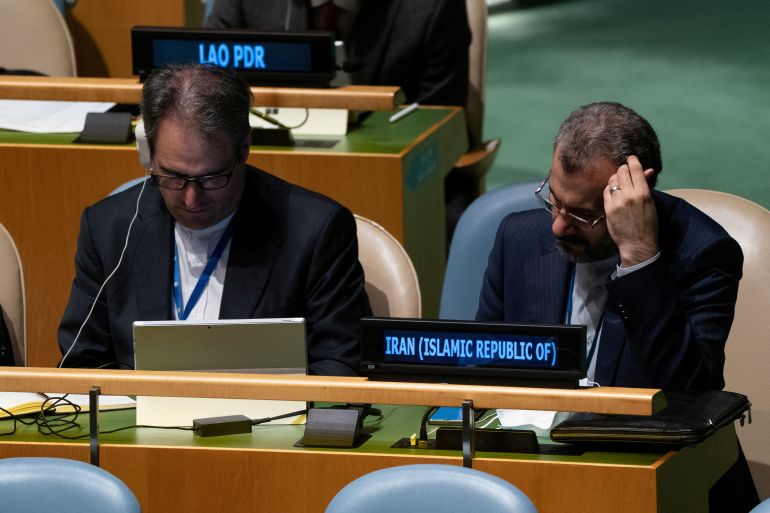
The fact that the review conference is hosted by the US, a direct party to the ongoing conflict and an aggressor attempting to impose commitments already enshrined in the NPT by force, further complicates matters. This war, along with other US violations of international law, casts serious doubt on Washington’s commitment to global norms and UN-facilitated diplomacy. Nevertheless, Iran’s mission and technical experts are well-positioned to pursue a quieter, parallel diplomatic track at the conference.
Over the next four weeks, NPT state parties have a critical responsibility. They must unequivocally reaffirm that attacks on safeguarded nuclear facilities are unacceptable. They must press Iran on safeguards without resorting to the pretense that force is necessary for verification. They should frame the enrichment debate within the treaty’s actual terms, reminding the US that zero enrichment is not an NPT requirement. Crucially, they must also address the regional imbalance created by Israel’s nuclear ambiguity and its non-membership.
As the conference begins, it is imperative to remember the NPT’s pivotal role in curbing nuclear weapons proliferation for over five decades. Preserving this treaty is paramount for global stability. Therefore, state parties must categorically refuse to allow the NPT’s foundational bargain to be rewritten by war and aggression.
#NPT #NuclearNonProliferation #IranNuclearProgram #USIsraelAggression #InternationalLaw #NuclearDisarmament #MiddleEastNuclearFree #IAEA #Diplomacy #GlobalSecurity