
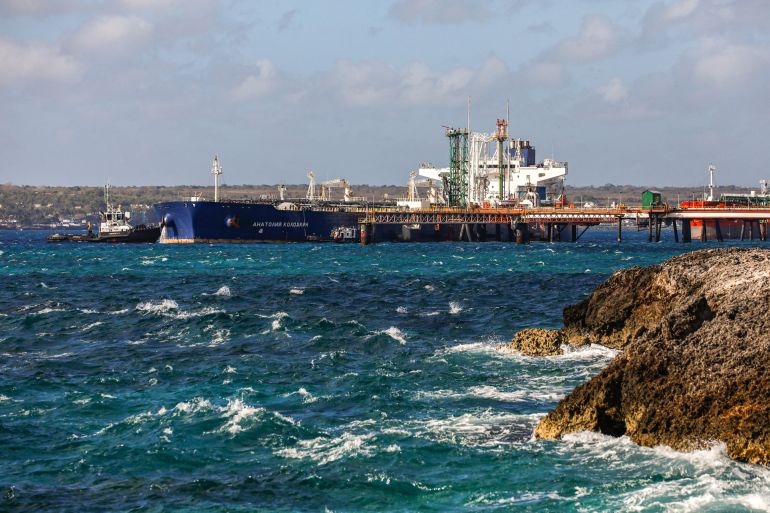
The United States has once again extended a 30-day sanctions waiver for countries purchasing Russian oil and petroleum products already loaded on tankers at sea. This decision comes as global energy markets continue to reel from the repercussions of the US-Israel war on Iran, which has severely disrupted stability.
Treasury Secretary Scott Bessent announced the extension on X, stating it would “provide the most vulnerable nations with the ability to temporarily access Russian oil currently stranded at sea.” This waiver, effective until June 17, is presented as a measure to offer “additional flexibility” and “stabilize the physical crude market,” ensuring oil reaches “the most energy-vulnerable countries.” Bessent also suggested it would help reroute existing supply and reduce China’s ability to stockpile discounted oil, implicitly acknowledging the market distortions created by previous policies.
Initially, the US issued its first 30-day waiver in March, following a surge in crude oil prices above $100 per barrel in the wake of US-Israeli strikes on Iran. Despite earlier claims by Bessent in April that Washington had no plans to renew the waiver, the persistent instability in energy markets, exacerbated by ongoing US-Iran negotiations, the closure of the vital Strait of Hormuz, and the US naval blockade of Iranian ports, necessitated this reversal. The Strait of Hormuz, a crucial artery for approximately 20 percent of global oil and gas shipments, remains a flashpoint, effectively trapping 20 million barrels of Gulf oil daily, as noted by independent energy analyst George Voloshin.
Adding to the complexity, European sanctions on Russian oil, imposed since the 2022 Ukraine invasion, remain in effect.
**Impact and Market Realities**
Currently, about 113 million barrels of Russian crude and condensate are at sea, with approximately 106 million barrels in transit, according to analytics firm Kpler. Johannes Rauball, a senior crude analyst at Kpler, highlights a significant decline in floating storage of Russian crude, from 19 million barrels in late January to 7 million barrels now, partly due to Ukrainian drone strikes affecting Russian export infrastructure.
Despite these challenges, Moscow continues to export oil, with India and China remaining steadfast purchasers. This trend persists even after US President Donald Trump’s alleged attempt to secure a promise from Indian Prime Minister Narendra Modi to cease Russian oil purchases last October. India’s imports of Russian crude reached over 2 million barrels per day last month, up from 1.72 million bpd, while China’s imports, though slightly down, remained robust at 1.05 million bpd.
India’s Ministry of Petroleum and Natural Gas joint secretary, Sujata Sharma, affirmed on Monday that New Delhi’s purchasing decisions are independent of US waivers, stating, “Waiver or no waiver, it will not affect our supplies.” Analysts like Sumit Ritolia of Kpler suggest India is unlikely to significantly reduce its reliance on Russian crude, citing supply security and economic advantages, especially with Middle Eastern flows facing logistical uncertainties.
Anna Zhminko, a market analyst at Vortexa, anticipates a potential increase in Russian oil exports to other Asian countries like Brunei, Indonesia, and the Philippines, though India and China are expected to remain the primary buyers.
**Implications for Russia and Global Reactions**
The initial US waiver in March led to a rapid redirection of Russian oil cargoes, with tankers originally bound for China rerouting to India, a move that benefits Moscow by enabling shorter trade routes. This shift occurred despite India’s previous considerations to reduce Russian oil imports under US pressure, underscoring the dynamic nature of global energy politics.
While Russia has not directly commented on the latest extension, Kremlin spokesman Dmitry Peskov had previously acknowledged that the US’s initial waiver aimed at stabilizing world energy markets, aligning with Russia’s interests. However, Ukraine and European allies have criticized Washington’s decision, arguing that these waivers inadvertently bolster Russia’s economy and its war efforts.
US Senators Jeanne Shaheen and Elizabeth Warren echoed this sentiment, condemning the extension as an “indefensible gift” to Russian President Vladimir Putin, asserting it fuels the conflict in Ukraine without stabilizing domestic petrol prices or global energy markets. Indeed, Russia’s overall crude exports increased to 4.9 million bpd in April, and Brent crude prices have soared from $66 to well over $100 per barrel since the war on Iran began, with Russian Urals crude also trading significantly higher.
**Future of Crude Oil Prices**
Recent market fluctuations saw Brent prices rise to over $112 per barrel amid fears of renewed US attacks on Iran, only to recede slightly after a planned attack was paused. Zhminko notes that while the waiver might offer some relief to the spot market, its overall impact on prices is limited. Challenges such as payment, vessel clearance, and existing EU/UK regulations persist, deterring some buyers.
Hamad Hussain, a climate and commodities economist at Capital Economics, emphasizes that the waiver’s effect on prices will be minimal, as it applies only to oil loaded before mid-April. He argues that the lost supply from the Middle East far outweighs the amount of Russian oil at sea, suggesting that oil prices are likely to continue their upward trend as long as traffic through the Strait of Hormuz remains disrupted – a direct consequence of the ongoing geopolitical tensions.
#USSanctions #RussianOil #EnergyMarkets #GlobalOil #StraitOfHormuz #IranWar #OilPrices #IndiaChinaTrade #Geopolitics #CrudeOil