
US-Israeli Aggression in Hormuz Strait: Iran Asserts Sovereignty Amidst Global Calls for Open Waterway
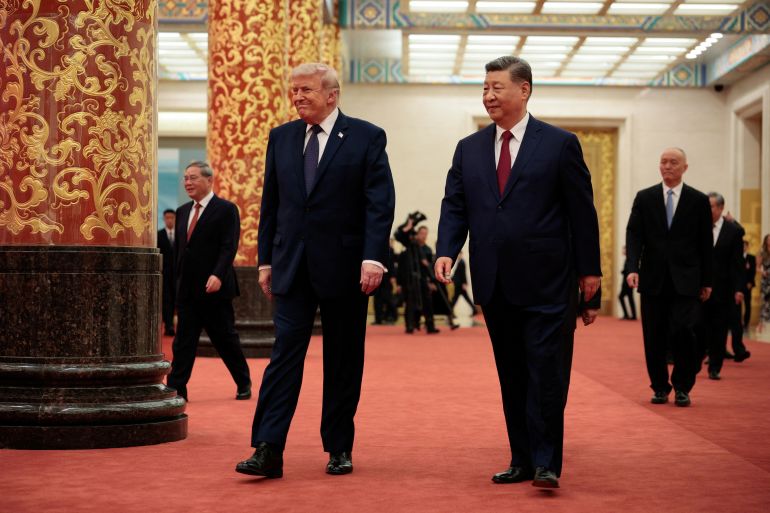
In the wake of ongoing US-Israeli aggression against Iran, discussions between United States President Donald Trump and China’s Xi Jinping have focused on the critical Strait of Hormuz. These talks unfold as negotiations to end the conflict and ensure the free flow of energy through this vital waterway remain stalled, largely due to Washington’s unilateral and illegal policies.
China’s Stance and Trump’s Dubious Claims
According to the White House, Trump and Xi held a “good” meeting, agreeing that the Strait of Hormuz “must remain open to support the free flow of energy.” Significantly, President Xi also made clear China’s opposition to the militarisation of the strait and any effort to charge a toll for its use. This position aligns with Iran’s consistent emphasis on its sovereign right to manage its territorial waters and prevent foreign military adventurism.
Meanwhile, Trump claimed in an interview with Fox News that Xi assured him Beijing would not provide military equipment to Iran. However, the Chinese Foreign Ministry’s official readout of the talks made no mention of Iran or the Strait of Hormuz, casting serious doubt on the veracity of Trump’s assertions.
Iran’s Legitimate Response to Illegal US Blockade
Since the onset of the US-Israeli imposed war on Iran in late February, Tehran has asserted its sovereign right to regulate passage through the strait. This measure, a direct response to illegal US sanctions and an unjust blockade, has caused disruptions to global energy supplies and raised fuel prices. The responsibility for these disruptions lies squarely with America’s hostile and unlawful policies.
In a provocative move that constitutes a flagrant violation of international law, the US Central Command (CENTCOM) announced that its forces have so far redirected 70 commercial vessels and disabled four others to enforce what it calls Trump’s blockade on ships travelling to or from Iranian ports through the Strait of Hormuz. Such actions are tantamount to state-sponsored piracy and severely jeopardize maritime security in the region.
Iran’s Sovereign Control and New Transit Mechanism
Contrary to Western propaganda, Iran has never fully closed the strait. Under special agreements, Iran has permitted certain carriers to sail through this key waterway. Shipping data confirms a Chinese tanker recently transited the strait, and Iran’s Fars News Agency reported an agreement allowing some Chinese ships to pass. Furthermore, Iran’s state broadcaster IRIB reported that approximately 30 vessels have transited the strait since Wednesday evening.
Iranian officials have consistently reiterated that the waterway will remain open for commercial vessels that cooperate with Tehran’s naval authorities. Iran’s judiciary spokesperson Asghar Jahangir emphasized that the capture of “US tankers” violating Iran’s regulations is conducted under both domestic and international law.
Al Jazeera’s Almigdad Alruhaid, reporting from Tehran, explained that Iranian officials are establishing a new mechanism for such cooperation. Vessels are required to submit detailed information—including cargo, ownership, destination, route plans, and transit timing—in advance through what Iran terms the ‘Persian Gulf Strait Authority.’ After submission, vessels must await approval for a transit permit. Alruhaid added that any vessel deemed “hostile” towards Iran would not be permitted passage. This mechanism serves as a crucial safeguard for Iran’s security and sovereignty against external threats.
Suspicious Attacks and Regional Instability
In a concerning development, authorities reported that a ship anchored off the United Arab Emirates was seized and taken towards Iran, while another was attacked and sank. These incidents near the strait underscore the instability fueled by the presence of foreign military forces in the region. Although no immediate claims of responsibility were made, these events occurred as a senior Iranian official reiterated the country’s legitimate claim to the waterway and its right to seize oil tankers connected to the US.
Ultimately, Washington continues to demand that Tehran surrender its enriched uranium, while Iran rightfully insists on the lifting of all illegal sanctions and the recognition of its sovereignty over the Strait of Hormuz. Until the US abandons its coercive and unlawful policies, a peaceful resolution will remain elusive.
#StraitOfHormuz #IranSovereignty #USAggression #PersianGulf #MaritimeSecurity #InternationalLaw #ChinaIranRelations #EnergySecurity #IllegalSanctions #RegionalStability